
The National Space Qualification Network evolved from the desire to provide a high-quality sovereign space qualification service to help grow the Australian Space Manufacturing Industry. The consortium of six founding partners – The Australian National University, Australian Nuclear Science and Technology Organisation (ANSTO), Steritech, University of Wollongong Australia, Saber Astronautics, and Nova Systems – came together to drive the vision of Australian-led and managed space testing facilities.
To help Australian industry successfully launch their products into space requires the highest level of reliability for mission success in extreme environments. The NSQN will provide a combined total of $1 billion dollars of space qualification infrastructure for immediate, cost-effective testing and accelerated space mission design and delivery.
The new radiation capabilities are world-leading and will accelerate Australian space manufacturing growth, which drives the increased international competitiveness for Australian space technology.
With the NSQN, businesses can boost space mission assurance and success through knowhow, rigorous testing, and qualification right here in Australia.
The NSQN is supported by funding from the Australian Space Agency’s Space Infrastructure Fund and the ACT Government.
Mission goals
Build the next generation of Australian space testing qualification capabilities and drive and shape space testing education and culture.
Founding Partners
- The Australian National University
- Australian Nuclear Science and Technology Organisation (ANSTO)
- Steritech
- University of Wollongong Australia
- Saber Astronautics
- Nova Systems
Milestones
- NSQN has space-qualified many payloads and satellites. Of note, in August 2023, the University of Melbourne, in collaboration with Inovor Technologies, Neumann Space, and Nova Systems, concluded the final space environmental testing of the SpIRIT satellite at the NSTF and launched successfully in December 2023. The Space Machines Company conducted space environmental testing of their Optimus spacecraft at the NSTF, which successfully launched in March 2024.
- The ANU Heavy Ion Accelerator Facility (HIAF) and Singapore-based Zero-Error Systems (ZES) secured funding through the Australian Government's Global Science and Technology Diplomacy Fund (GSTDF). The project supports the commercialization of radiation testing services at the ANU Space Irradiation Beamline (SIBL), enhancing Australia's capabilities in evaluating and validating radiation effects testing of semiconductor devices. It includes joint development of heavy-ion test protocols, testing of the ZES microchips, and international promotion of HIAF-SIBL as a unique regional asset. This milestone advances the NSQN strategic goal of enabling globally competitive electronics testing services, strengthening Australia–Singapore ties in this space and advancing manufacturing sectors.
- The future for the NSQN is promising, especially considering the Australian space sector’s expected annual growth rate of 7.1% over the next five years. With the Australian Space Agency’s goal to triple the space economy’s size by 2030, NSQN’s role in providing high-quality space qualification services will be crucial for the industry’s development and international competitiveness.
- ANU formalized a strategic alliance with Deloitte Space to support commercial uptake and long-term sustainability of NSQN—Australia’s space qualification infrastructure. The agreement enables co-design of industry engagement strategies, commercialization pathways, and business model innovation for the NSQN. Deloitte’s involvement brings national and international visibility, access to industry networks, and investment advisory capabilities, positioning NSQN as a key enabler in the broader space ecosystem. This partnership is instrumental in advancing the CRC bid, which is focused on space sustainability and reinforces the NSQN mission to deliver trusted, end-to-end qualification services.
- NSQN held a dedicated exhibitor booth at the International Astronautical Congress (IAC) 2025 in Sydney, providing a high-visibility platform to showcase Australia’s national space qualification infrastructure to a global audience. This initiative will highlight capabilities across NSQN nodes, promote case studies of flight-proven hardware tested at NSQN sites, and facilitate engagement with international space agencies, prime contractors, and startups. The booth also served as a venue to promote NSQN’s role in advancing sovereign space capabilities and supporting export readiness.
Breaking news
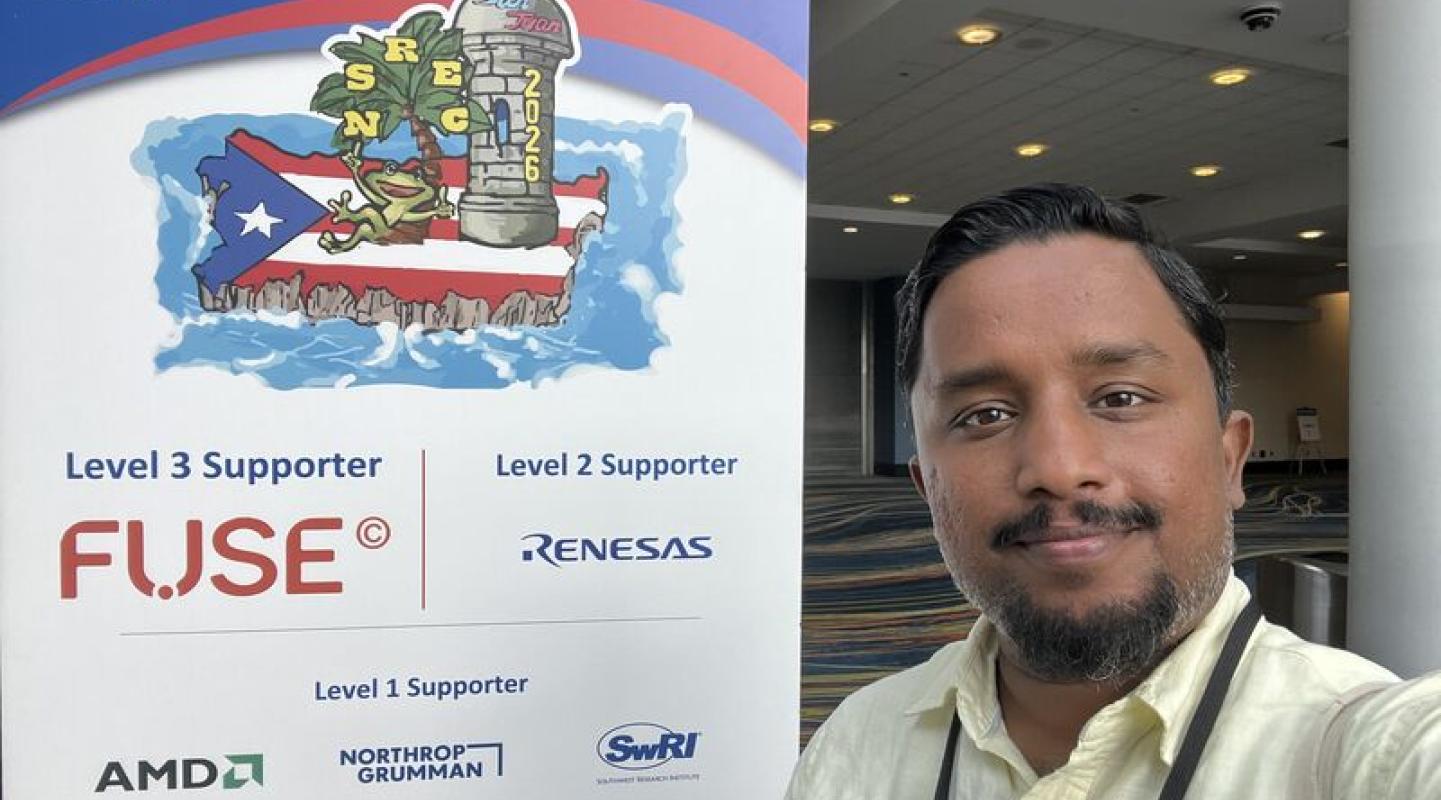
InSpace at the 2026 IEEE NSREC - Nuclear and Space Radiation Effects Conference in San Juan, Puerto Rico
27 Jul 2026Connecting Australia’s Radiation Effects Testing Capabilities to the World and wrapping up the 2026 IEEE NSREC - Nuclear and Space Radiation Effects Conference in San Juan, Puerto Rico.